Our Plane & Projects

Explore our 2024-2025 flagship aerial platform and all our projects across Software, Electrical, and Mechanical subteams

The Bear Trap (2024-2025)

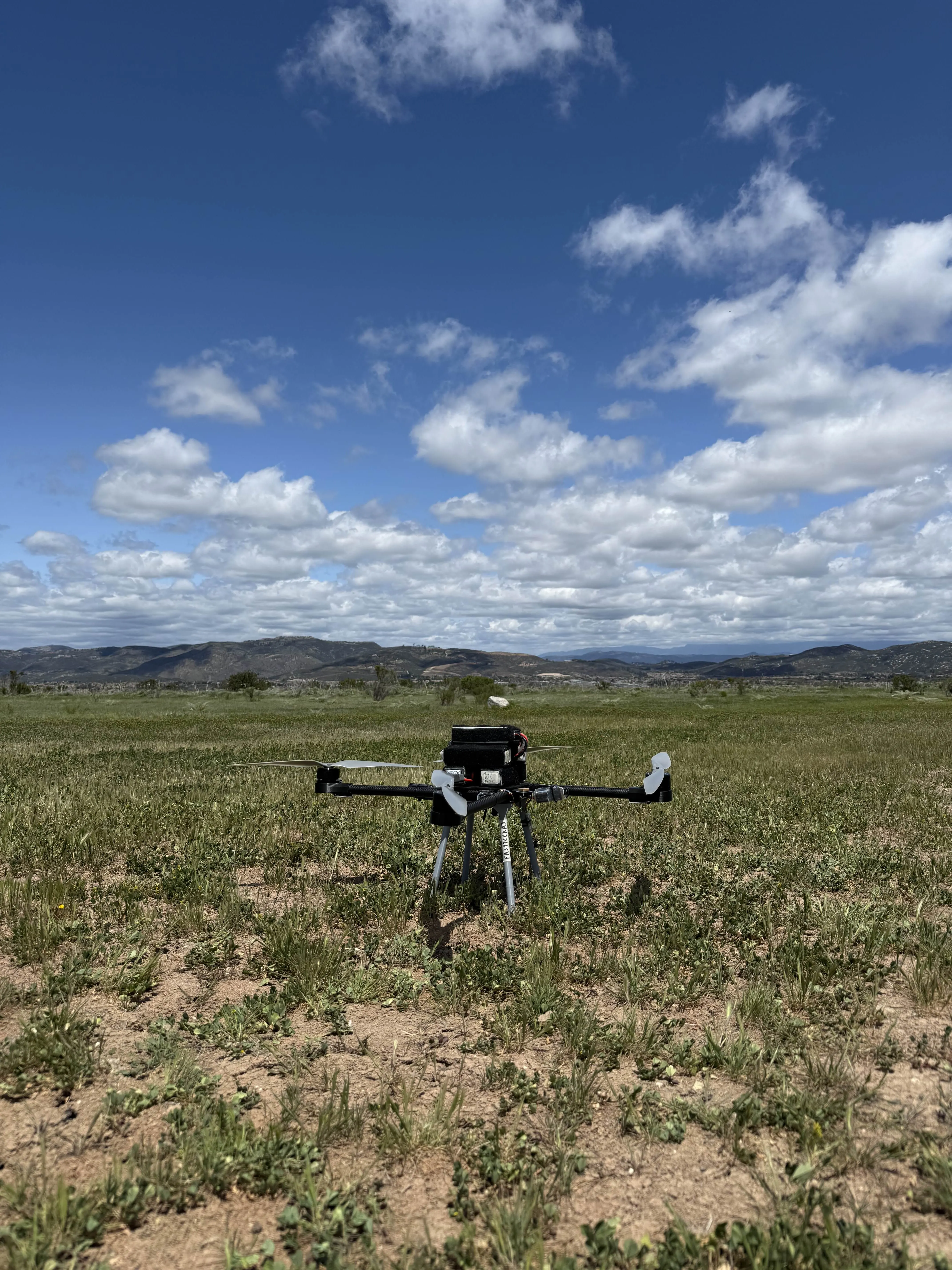
The Bear Trap is a multirotor quadcopter designed to be a simple and reliable platform to carry out competition mission tasks such as payload drop, waypoint pathing, and target localization. The quadcopter airframe design consists of a top and bottom plate made of carbon fiber which sandwiches the motor boom arms in a stiff structure designed for simplicity. The stiff nature of the airframe design and the carbon fiber used helps reduce structural vibrations, which are detrimental to flight controller performance.

The powertrain consists of 4110 340kv motors motors generating acombined 10 kg thrust kilos of thrust, giving The Bear Trap a thrust to weight ratio of 2.5rwr. The powertrain was carefully selected to give plenty of headroom on thrust while still remaining extremely efficient for long waypoint to waypoint flights. The system is powered by four 4s 5200 mAh batteries in 2s2p Lithium Polymer batteries.

The payloads on the aircraft consist of a Jetson Orin Nano onboard flight computer, a RaspberryPi based camera system, and a strobe beacon with a custom designed parachute and release mechanism. The Jetson onboard computer handles waypoint pathing, autonomous mission orchestration, and computer vision tasks.
The Bear Trap  (2024-2025)

Watch Our Drone in Action


Stickbug (2023-2024)
Stickbug  (2023-2024)

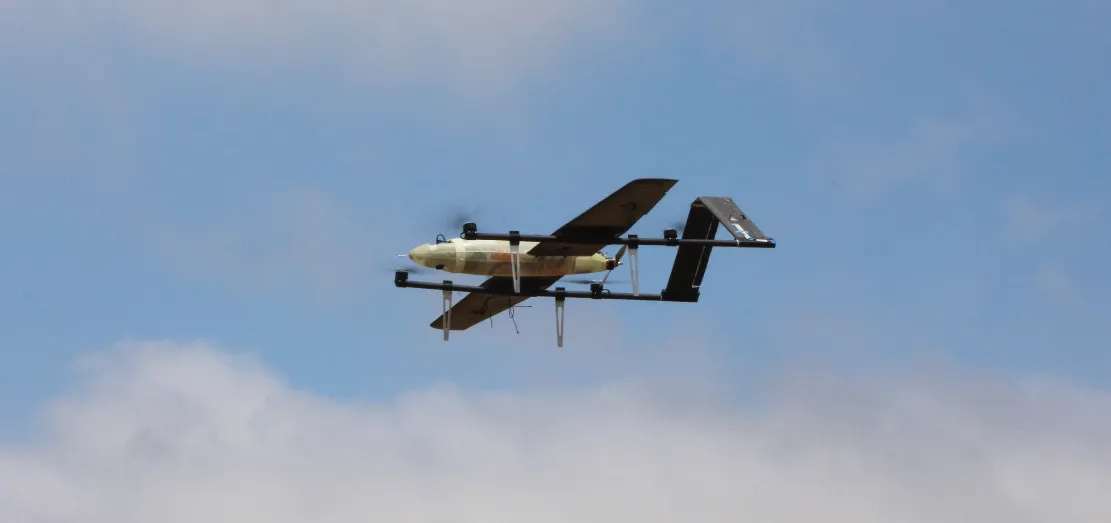
The Stickbug is a VTOL (Vertical Take-Off and Landing) fixed-wing aircraft designed to fulfill competition requirements including autonomous waypoint missions and payload drop operations. Its configuration allows for quick autonomous takeoff and landing up to 75 ft altitude, with an 8.5-foot wingspan to increase aerodynamic efficiency in forward flight. The aircraft is built primarily from lightweight composites including carbon fiber, fiberglass, and wood, meeting the 55 lbs maximum takeoff weight requirement.

The propulsion system consists of five Sunny Sky X6215S 170KV motors. Four motors are located on two tail booms in a stable square orientation for VTOL, each providing over 18 pounds of thrust with 22x6.5-inch propellers. A Scorpion S2 5525 170KV motor at the rear fuselage supplies forward thrust with a 20x10-inch propeller, capable of approximately 20 pounds of thrust.

The aircraft systems include a Cube Orange flight controller running ArduPlane for robust manual and autonomous control. The NVIDIA Jetson Orin Nano onboard computer handles mission logic, dynamic path planning, and integrates subsystems like the camera gimbal and airdrop system. The payload system features a Lucid Triton 200S camera with a 20-megapixel sensor and 50mm lens, mounted on a custom 2-axis brushless gimbal for precise target identification.
Watch Our Plane in Action


Team-Specific Projects

Explore the latest work from each subteam.

Electrical

Airdrop

Airdrop

Electrical

  • Tools : Arduino, Python
  • Skills : PID Control, Servo Motors

The airdrop is responsible for the storage and release of the payload. Our goal is to securely hold the payload during flight, match specific payloads to their intended target, and drop the payload at the correct position such that we hit our target while in forward flight.

Antenna Tracker

Antenna Tracker

Electrical

  • Tools : Arduino
  • Skills : GPS, PID Control

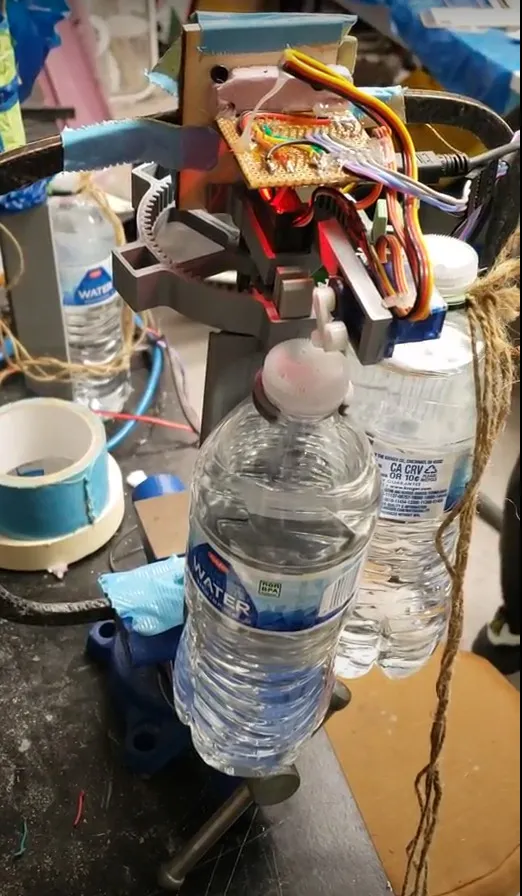
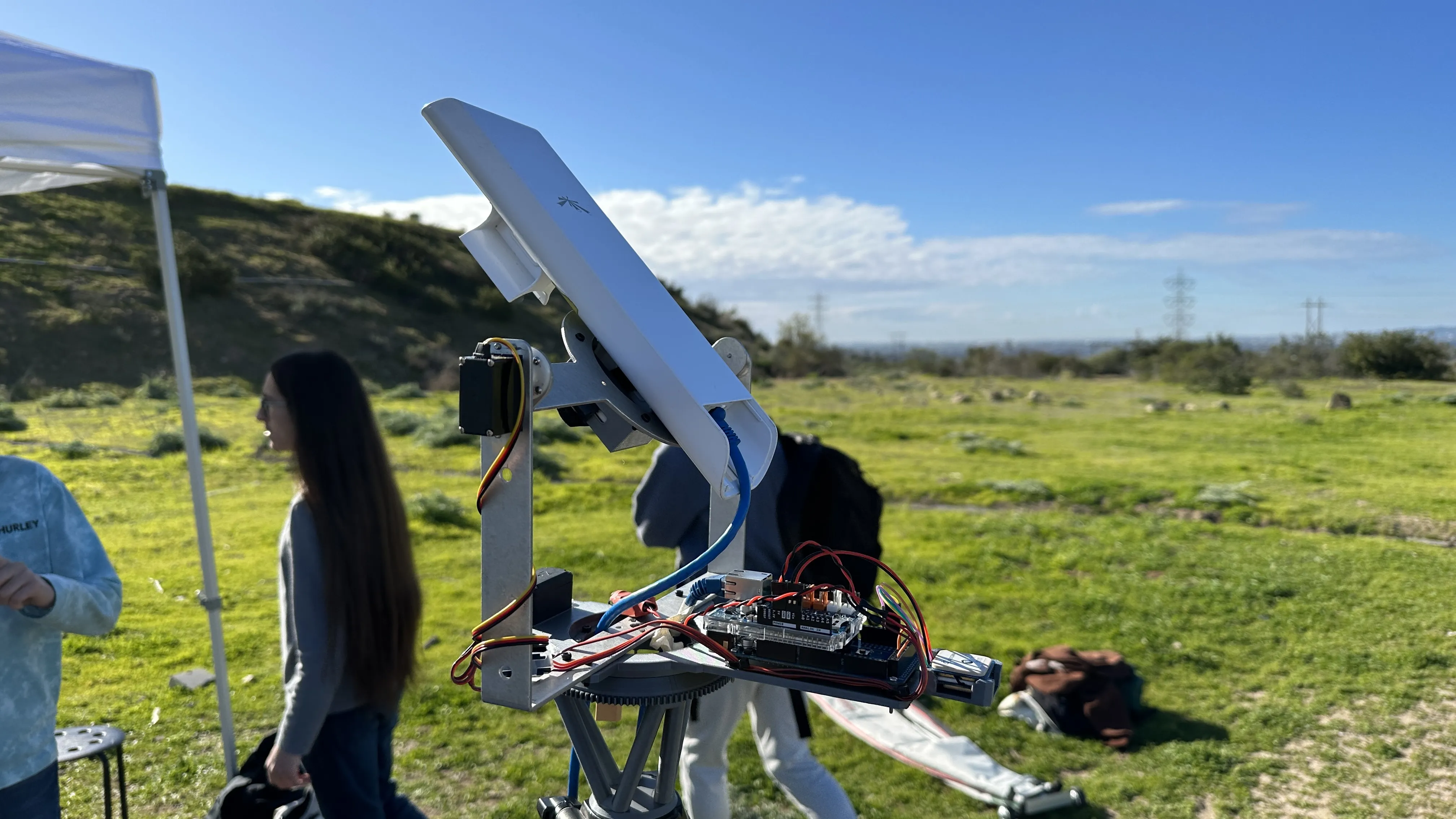
The Antenna Tracker maintains a specialty high-fidelity connection with the plane. A GPS coordinate is relayed to the GCS from a different wireless connection, which is then relayed to the antenna tracker. The antenna tracker has its own GPS onboard, and computes the azimuth and elevation angles needed to point from antenna tracker to the plane using some coordinate transformations and trigonometry. The elevation angle is then written to the elevation servo, while the azimuth angle is fed into a PID controller to align the antenna tracker with the setpoint using a magnetometer.

Custom Battery Pack

Custom Battery Pack

Electrical

  • Skills : Battery Design, Electronics

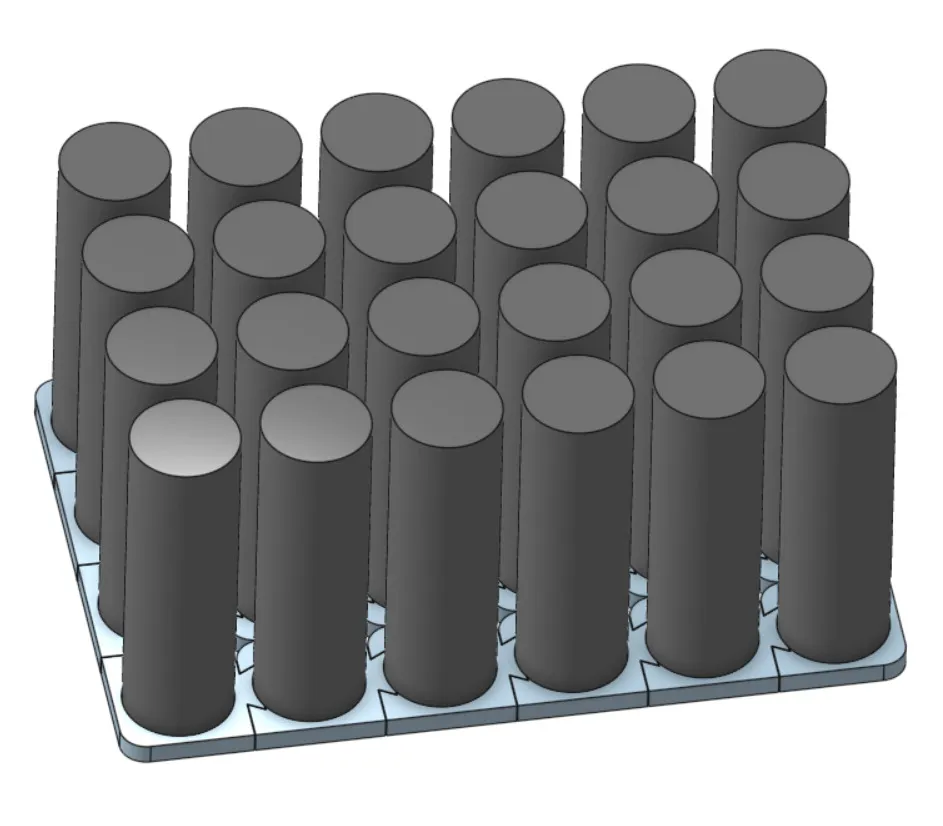
A custom battery pack enables us to consolidate our batteries into a single physical unit that only requires one connector, takes up less volume, and ideally less weight while maintaining the same power capabilities. The goal is for the battery’s cells to be splittable so we can legally transport them on a plane for competition. Research is preliminary, but promising.

Guided Payload

Guided Payload

Electrical

  • Tools : C++, ESP32
  • Skills : Controls

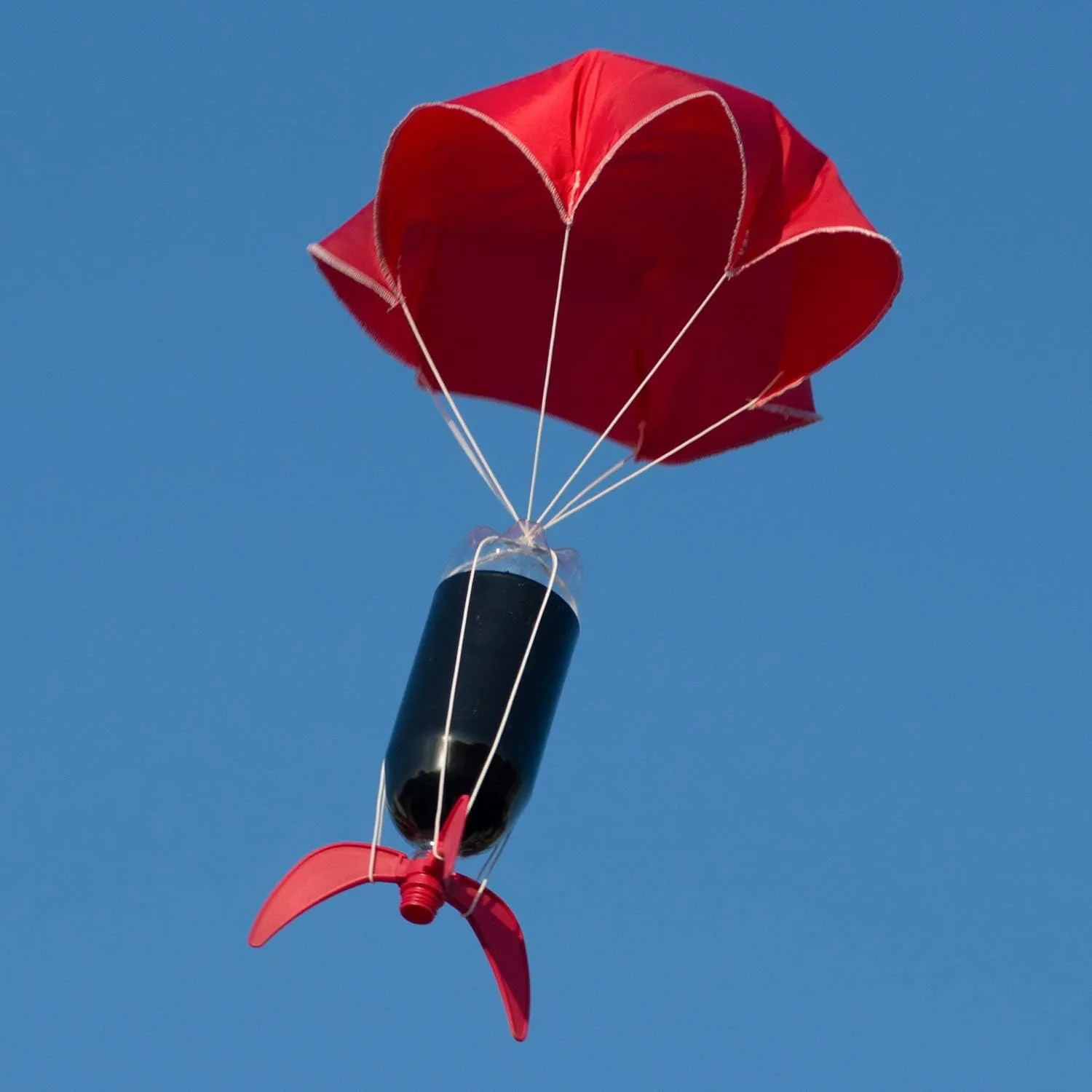
The Guided Payload aims to improve airdrop accuracy by using servos to steer the water bottle’s parachutes towards the target on the ground. Once in the air, the flight controller will send the drop coordinates of a target to the bottle over WiFi. The bottle will be released, at which point the ESP32 will run a control algorithm to calculate how much to pull the parachute’s strings so the bottle falls towards the target’s coordinates.

Powerboard

Powerboard

Electrical

  • Tools : Altium Designer
  • Skills : PCB Design Power electronics

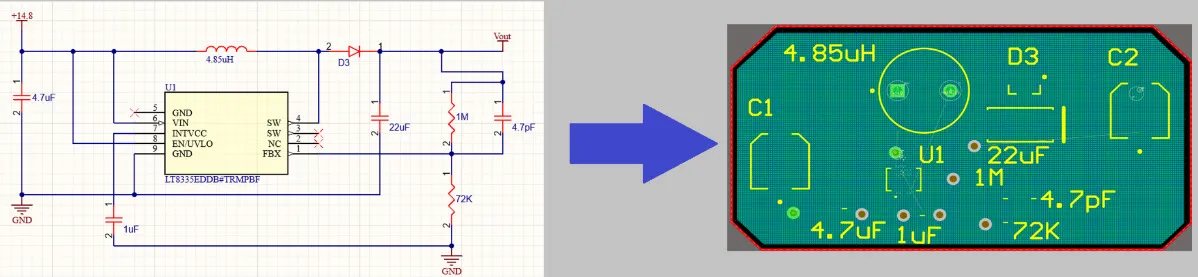
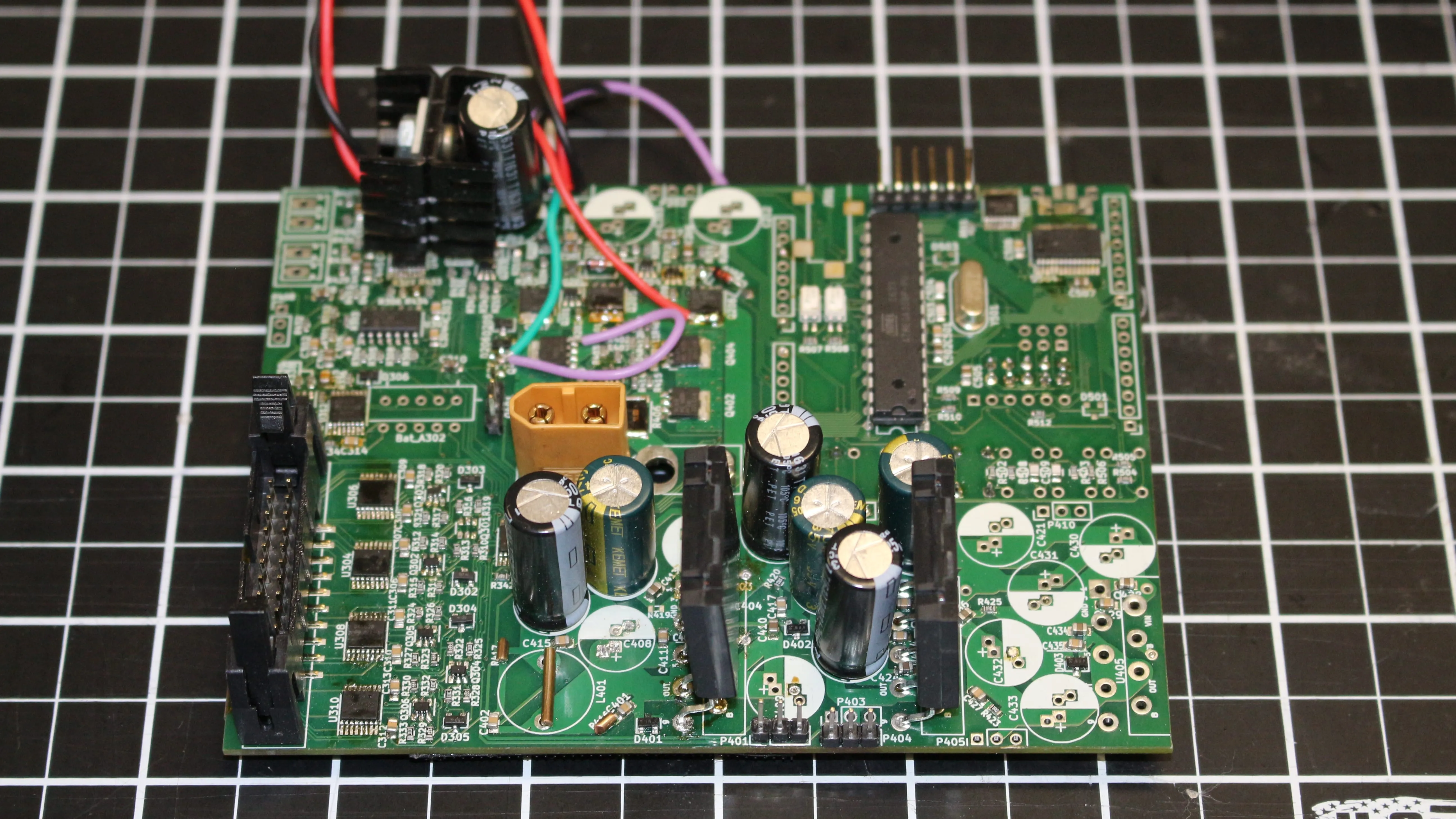
The power distribution board addresses the differing power needs of each electronic component on the plane, stepping voltage up or down correspondingly. Having a powerboard simplifies wiring by eliminating the several buck/boost converters scattered throughout the plane, and creates a modular plug-and-play design.

Signals Board

Signals Board

Electrical

  • Tools : Arduino, C
  • Skills : MAVLink, Electronics, Serial/CAN communication

The signals board is our plane's sensor extension, enabling us to collect data from sensors not built into the Pixhawk flight controller. The most important data it collects is temperature data from the ESC, batteries, and air inside the plane to warn us of potential overheating during flight. We are in the process of adding current measurements to provide real-time power usage during flight. Adding a sensor involves first writing the code to collect data with the Arduino, and once that is done wrapping the Arduino code in the C MAVLink library so that the Arduino can communicate with the Pixhawk over Serial connection.

Mechanical

Camera Gimbal

Camera Gimbal

Mechanical

  • Tools : Solidworks
  • Skills : 3D printing, Servos

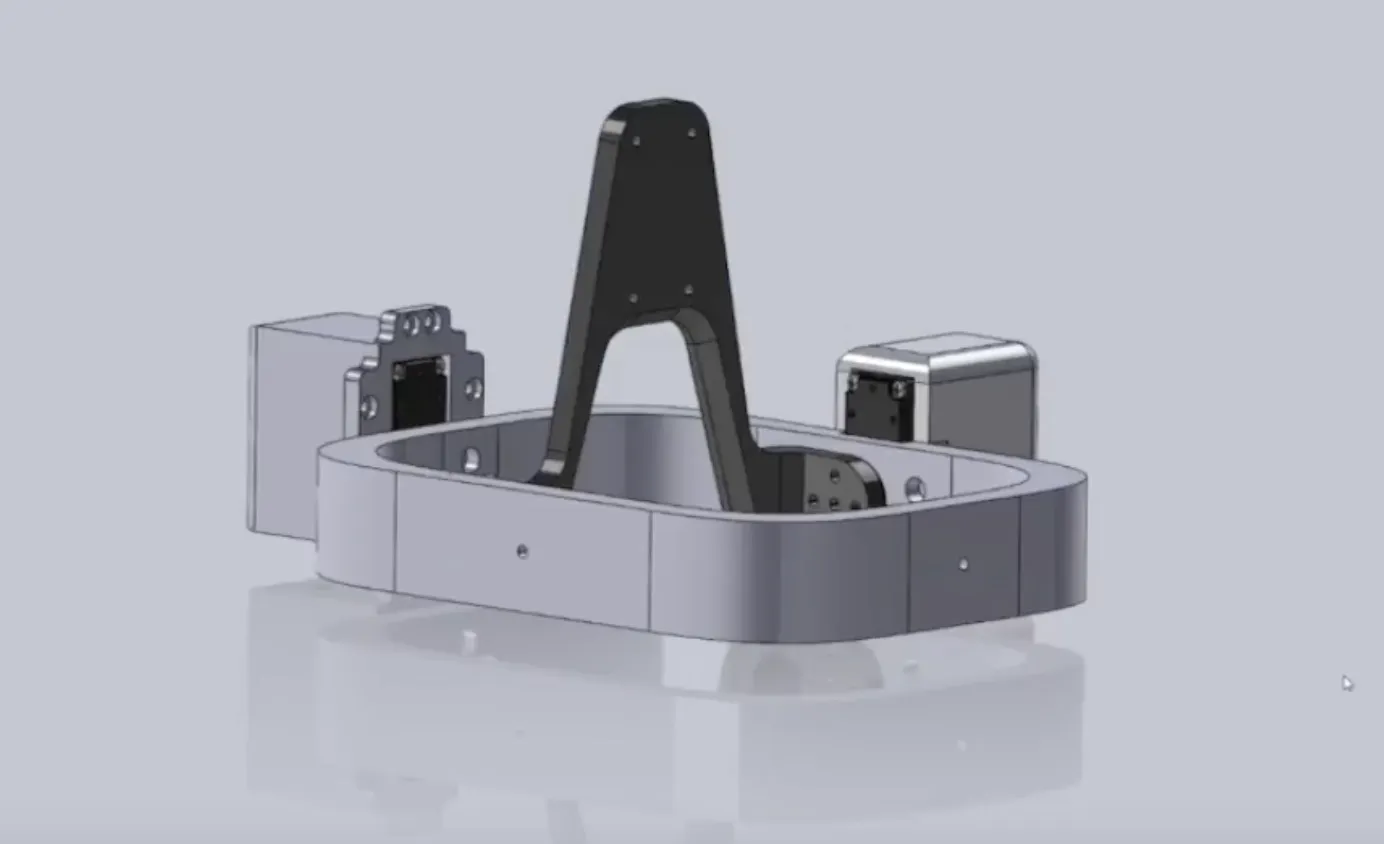
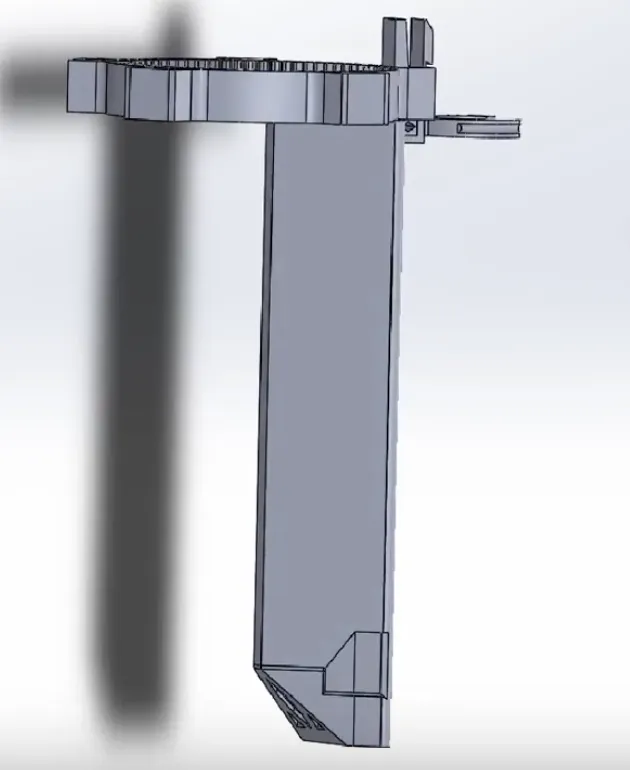
The Camera Gimbal securely houses and stabilizes our camera in the fuselage. It also provides a two axis mechanism to allow the camera to pitch - ensuring the camera points at the ground regardless of the plane's pitch and roll.

Manufacturing

Manufacturing

Mechanical

  • Skills : Wet-Composite layup, laser cutting, 3D printing, CNC hot wire cutting, Structures, manufacturing techniques and processes

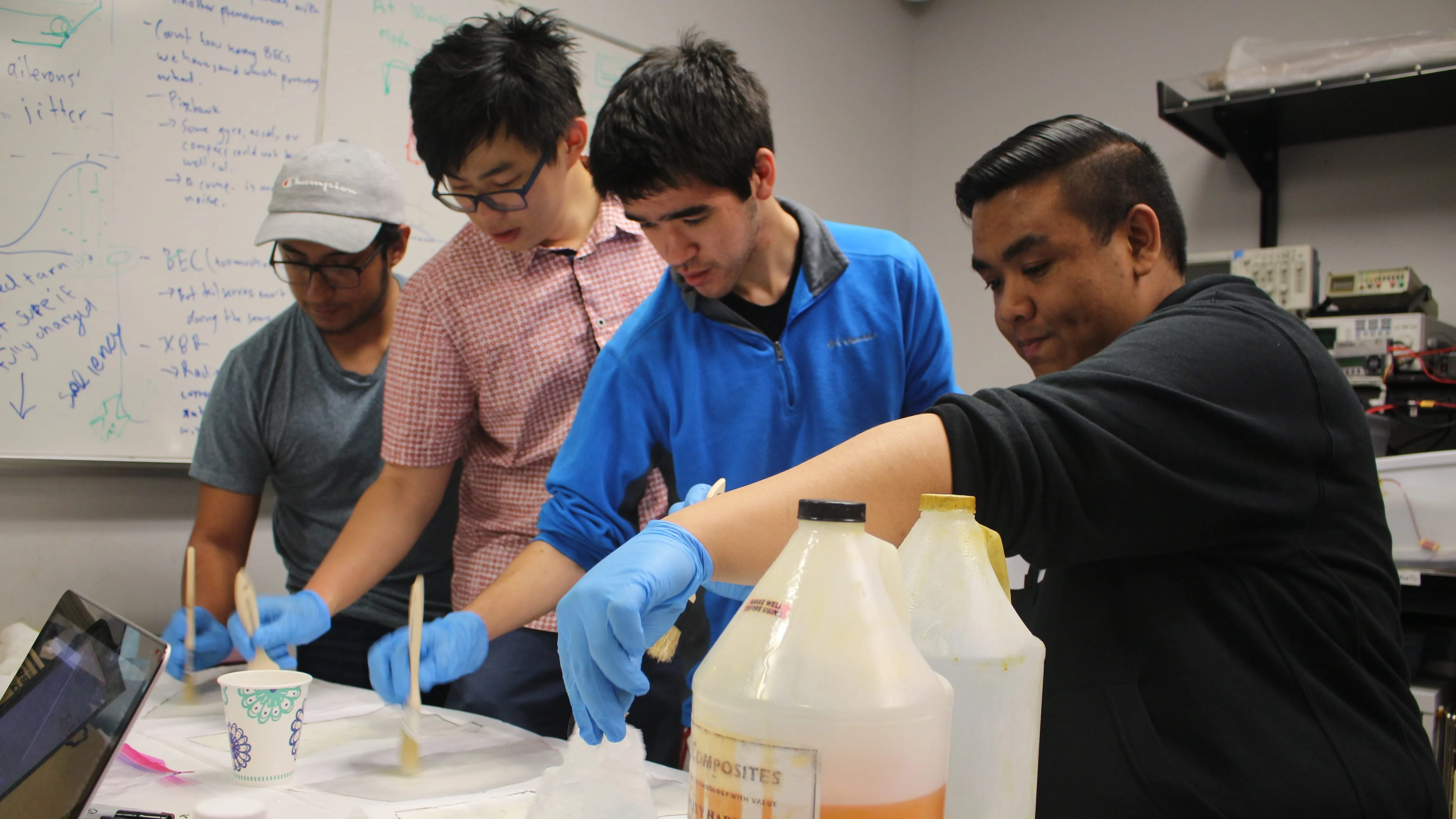
Manufacturing takes the designs from the optimization program and brings them to life. We create everything from scratch, from the skin with layup carbon fiber or fiberglass, to the interior structure with laser cut plywood, and to the foam molds that create the shape of the entire aircraft.

New Plane Design

New Plane Design

Mechanical

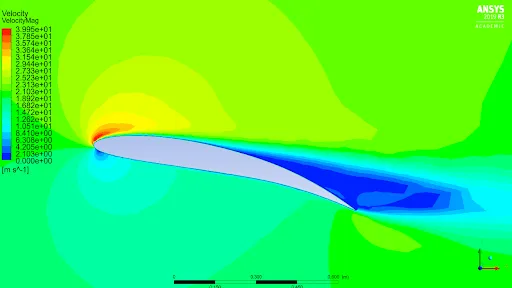
    The team is creating a new flight platform for the changing requirements of the SUAS competition. Using both in house and commercial analysis software (e.g. XFoil and Ansys), the team will be able to create the most efficient airframe while also accomidating electrical and software requirements.

    Optimization

    Optimization

    Mechanical

    • Tools : MATLAB
    • Skills : Structural and Aerodynamic analysis, Gradient Based Optimization

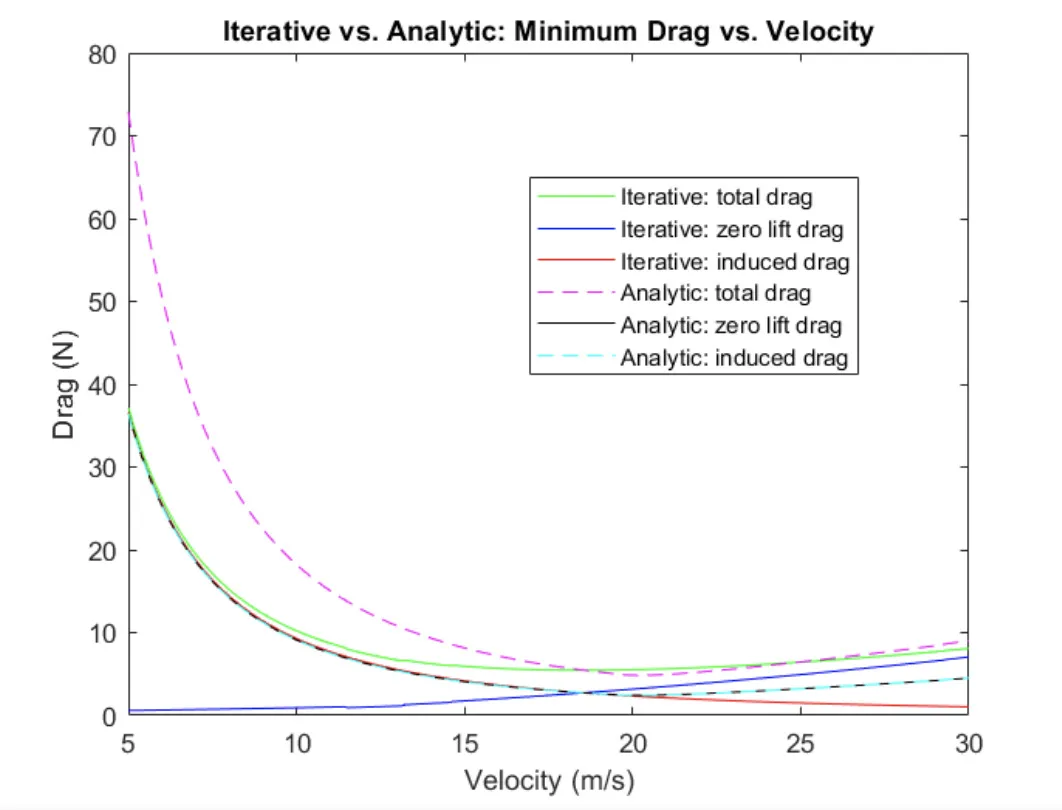
    Through the use of MATLAB TUAS Optimization members are able to apply gradient based optimization methods to enhance the competition aircrafts design and manufacturing. Based on competition parameters and flight constraints our team will seek to find ways to identify the most efficient, lightweight, and structurally sound aircraft design that can achieve all required tasks. As a result, material usage is minimized and flight performance is maximized for our yearly missions!

    Parachute

    Parachute

    Mechanical

    • Tools : Solidworks
    • Skills : 3D Printing, Aerodynamics

    The parachute is designed to allow for a soft landing, guidance, and is packaged so that the airdrop mechanism is compact and reliable.

    Software

    Dataset Generation

    Dataset Generation

    Software

    • Tools : Python
    • Skills : Data Augmentation

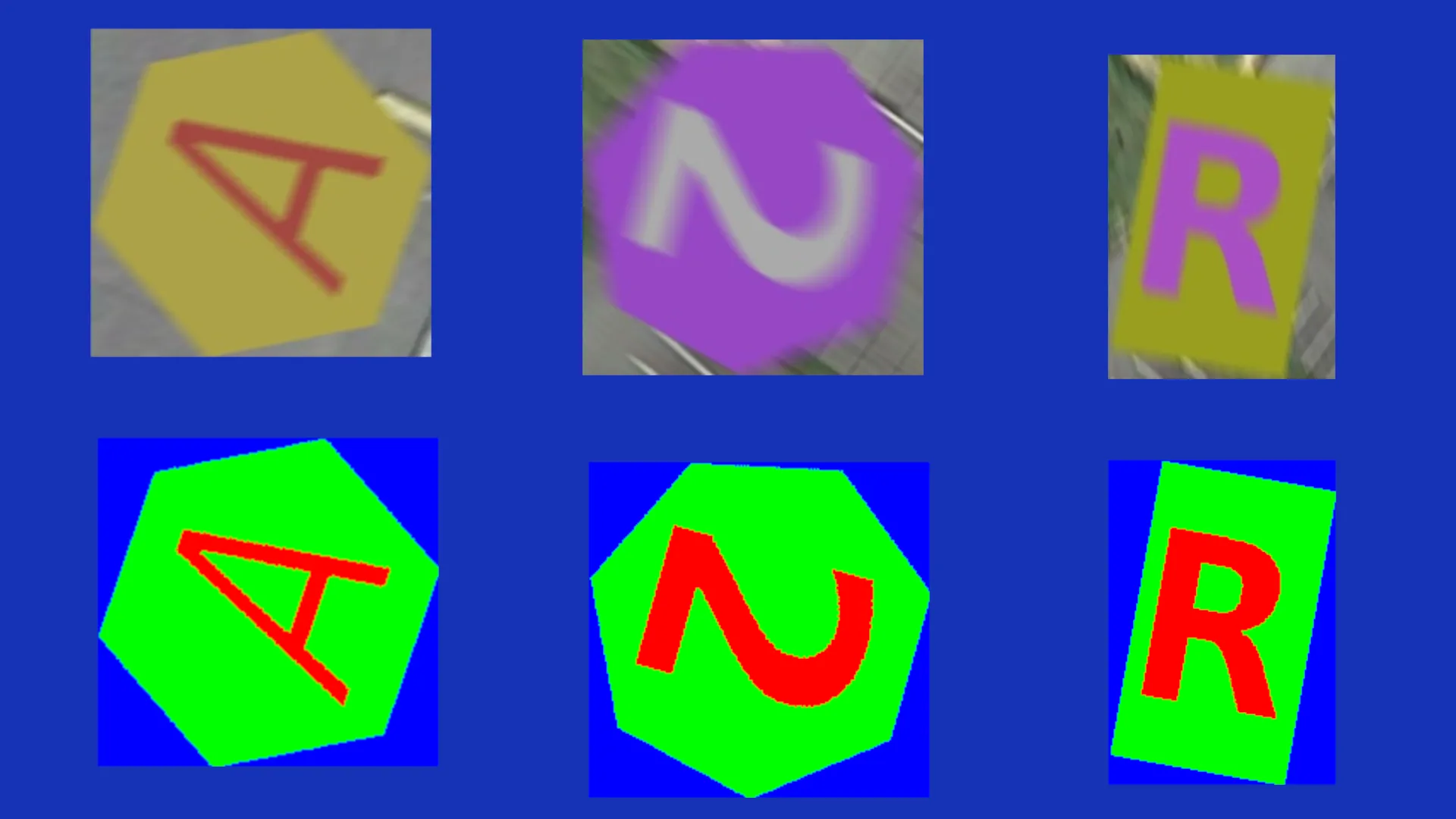
    Dataset Generation is what powers the training and testing of many of our Computer Vision models. It is crucial for us to have data that is realistic and lines up with the competition standards.

    GCS

    GCS

    Software

    • Tools : Go, React, CSS, JavaScript, Docker, InfluxDB, Grafana
    • Skills : Frontend/Backend web development, HTTP/Networking

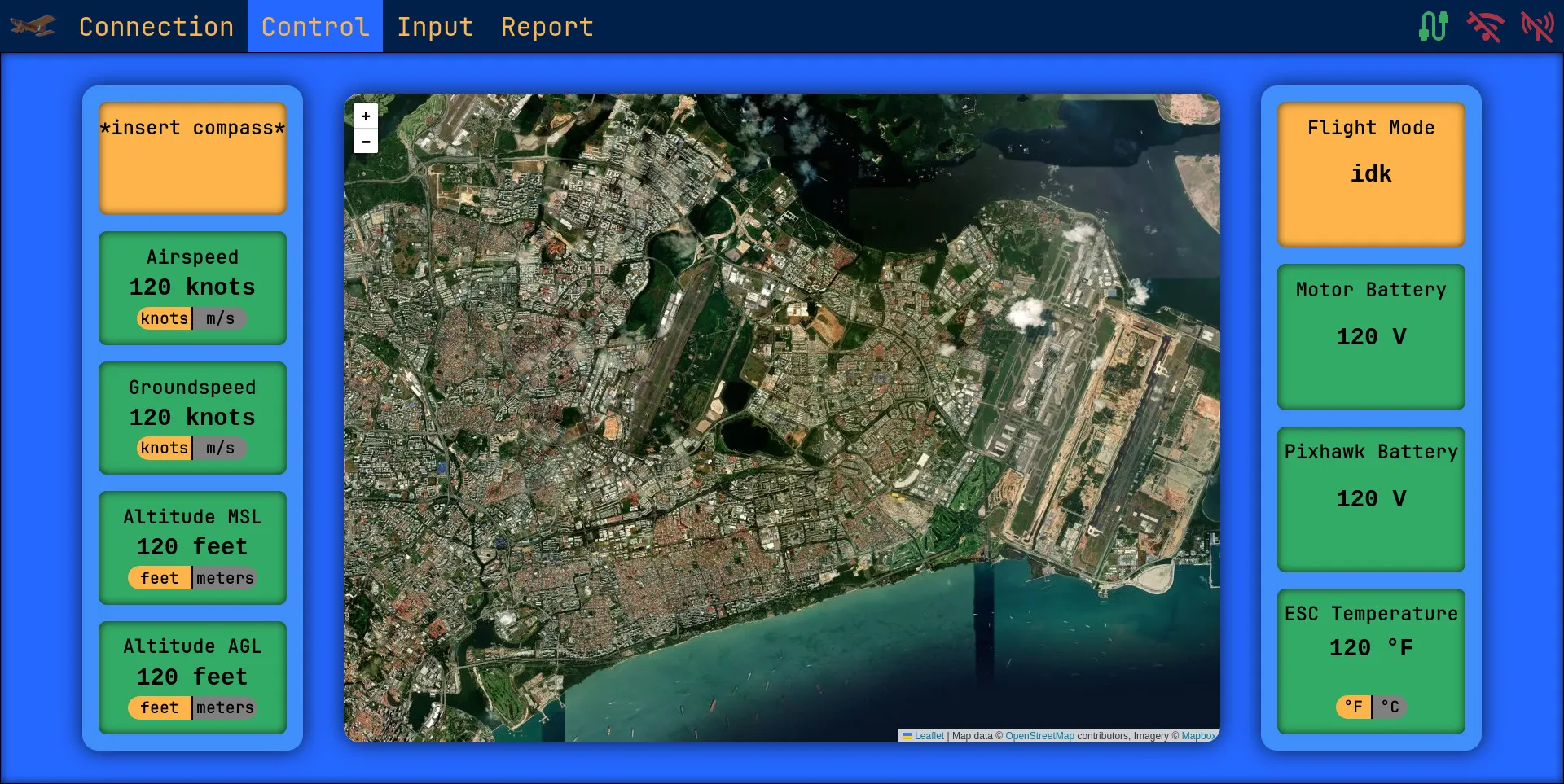
    The ground control station (GCS) is comprised of a frontend web application and a backend web server. The frontend is used to monitor and interact with plane in order to fulfill mission objectives. The backend is responsible for communicating between our various software systems and presenting information to the frontend.

    OBC

    OBC

    Software

    • Tools : C++
    • Skills : Path Planning, Computer Vision, HTTP/Networking, Concurrency

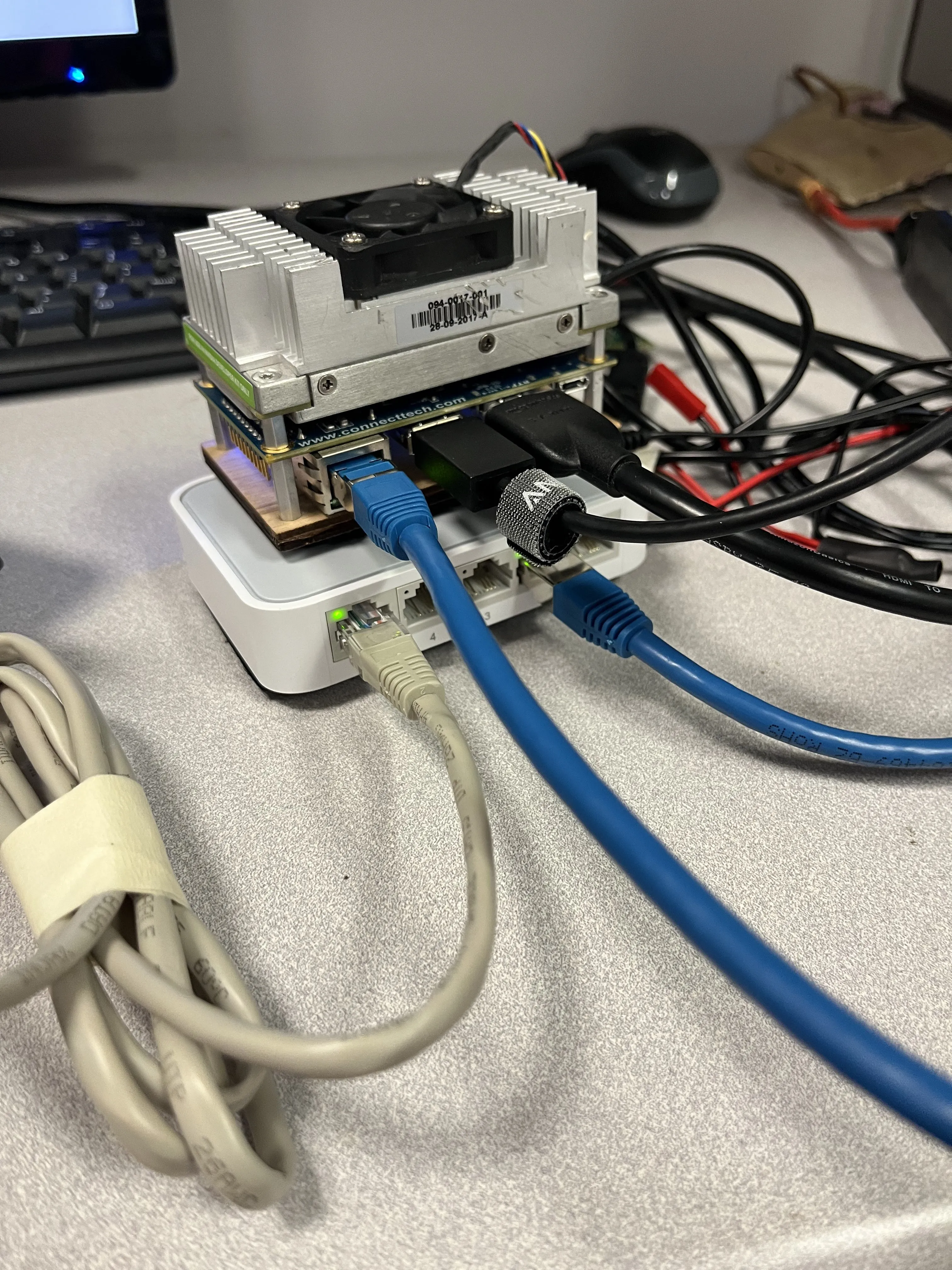
    The Onboard Computer (OBC) interfaces with various components on the plane and controlling the state of mission tasks. It is responsible for generating autonomous way-point missions and sending them to the flight controller. The OBC also communicates with the camera on the plane to take images of competition ground targets. Here, these images are fed through our entire computer vision pipeline and processed in order to assign payloads to targets and locations.

    ODLC (CV Pipeline)

    ODLC (CV Pipeline)

    Software

    • Tools : Python, PyTorch, Jupyter
    • Skills : Computer Vision, Deep Learning, Object Detection, Segmentation, Classification

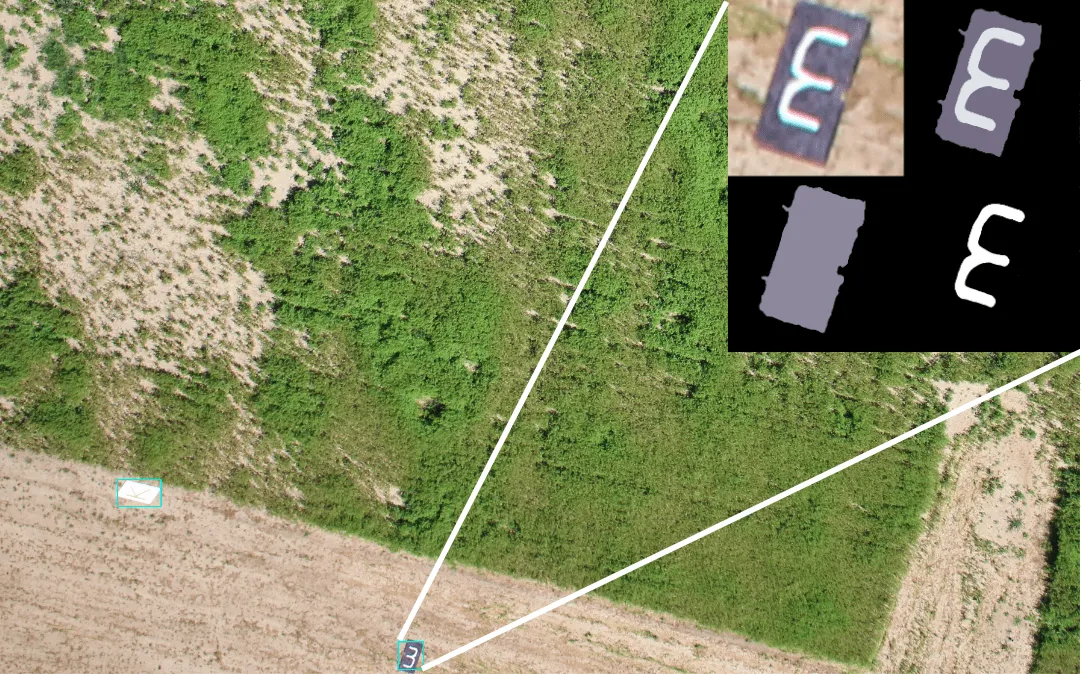
    The ODLC pipeline is responsible for detecting and classifying competition targets. The images from the camera undergo multiple stages of the pipeline where the targets are cropped out and classified. There is also a localization stage which assigns a geolocation to each of the competition targets (for usage in the airdrop task).

    Path Planning

    Path Planning

    Software

    • Tools : C++

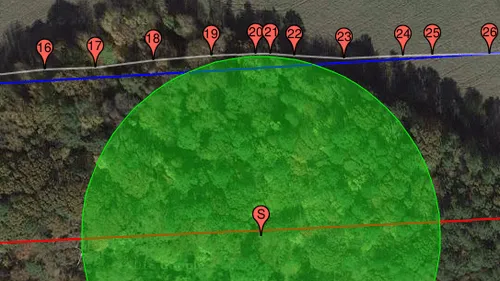
    During the competition, our plane must accurately hit a series of waypoints and cover a specified search area while avoiding other UAVs in the air. To accomplish this task we develop a robust path planning system that uses Dubins' curves to plan obstacle free paths a fixed wing plane can navigate, and also modify the waypoint navigation controller of the Ardupilot autopilot to perform dynamic obstacle avoidance.